
Surgical management of congenital cardiac disease- hole in the heart
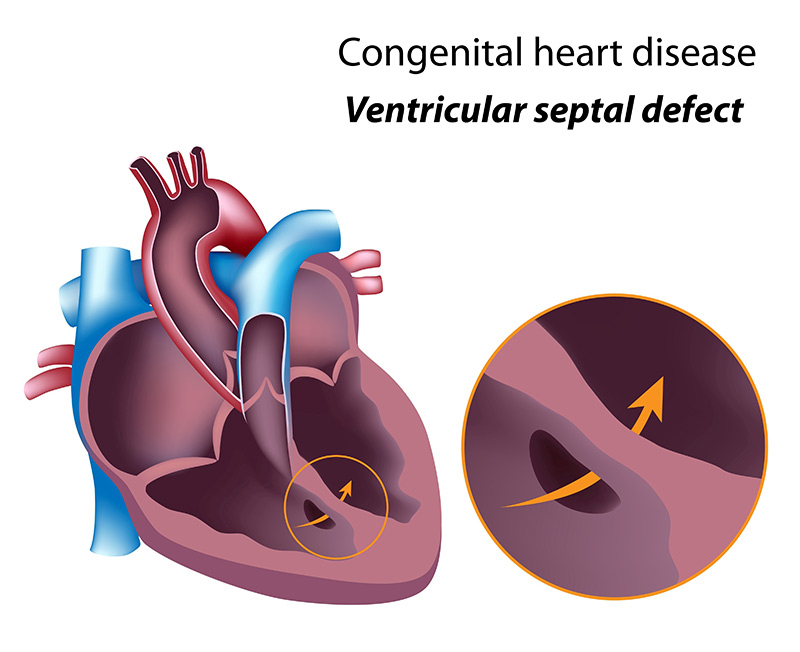
Congenital cardiac disease mostly manifests around the child hood, adolescent and young adult age group. Sometimes the symptoms manifest in older age group also. The most common congenital heart disease in Indian population are ‘ holes in the heart’ like ASD and VSD. Sometimes PDA or an accessory tubular structure in the hear that remains persistent in the young heart also produces similar symptoms.
These defects when large causes increase in lung blood flow and increases lung pressure causing breathlessness and palpitations. In the pediatric patients this causes repeated heart failure, feeding difficulties, growth retardation, failure to gain weight and height and exercise intolerance. This holes in the heart when producing symptoms should be closed as early as possible to prevent long term disability. When neglected they can progress to a stage where the becomes unresponsive to closure and an inoperable stage will eventually leads to early demise.
When diagnosis and closure of the defects is done in earlier age group the child will have no symptoms and can lead a normal life. The growth and development of the child will be normal following closure.
The management of these holes in the heart largely consists of surgical closure. In selected patient device closure is possible by groin route( like muscular VSD or small ASD).Surgery is safe barring rare complications.Before surgery the patient should be assessed by a pediatric cardiologist and pediatric cardiac Surgeon. The timing of surgery depends on the disease and condition of the patient.
Guidelines for a congenital heart disease patient
- The defect in the heart like ASD may remain asymptomatic for long period of time.
- May be incidentally diagnosed during routine health check up
- The only symptoms in infant may be frequent cough and cold.
- Large defects in the heart generally manifests in neonatal or infant age groups as pneumonia, unable to feed or unable to gain weight
- Larger the defects earlier is the symptoms and earlier should be the intervention
- Some small defects may not need any intervention. Naturally closes with age
- When a defect is discovered always go to pediatric cardiologist or a pediatric cardiac surgeon for a proper guidance regarding management